
Menu matrix, profile and contribution margin
Which dishes are bestsellers, bestsellers, puzzles or duds – and what they bring you.
Menu matrix, "Frequently ordered together" and profile are available with Max.
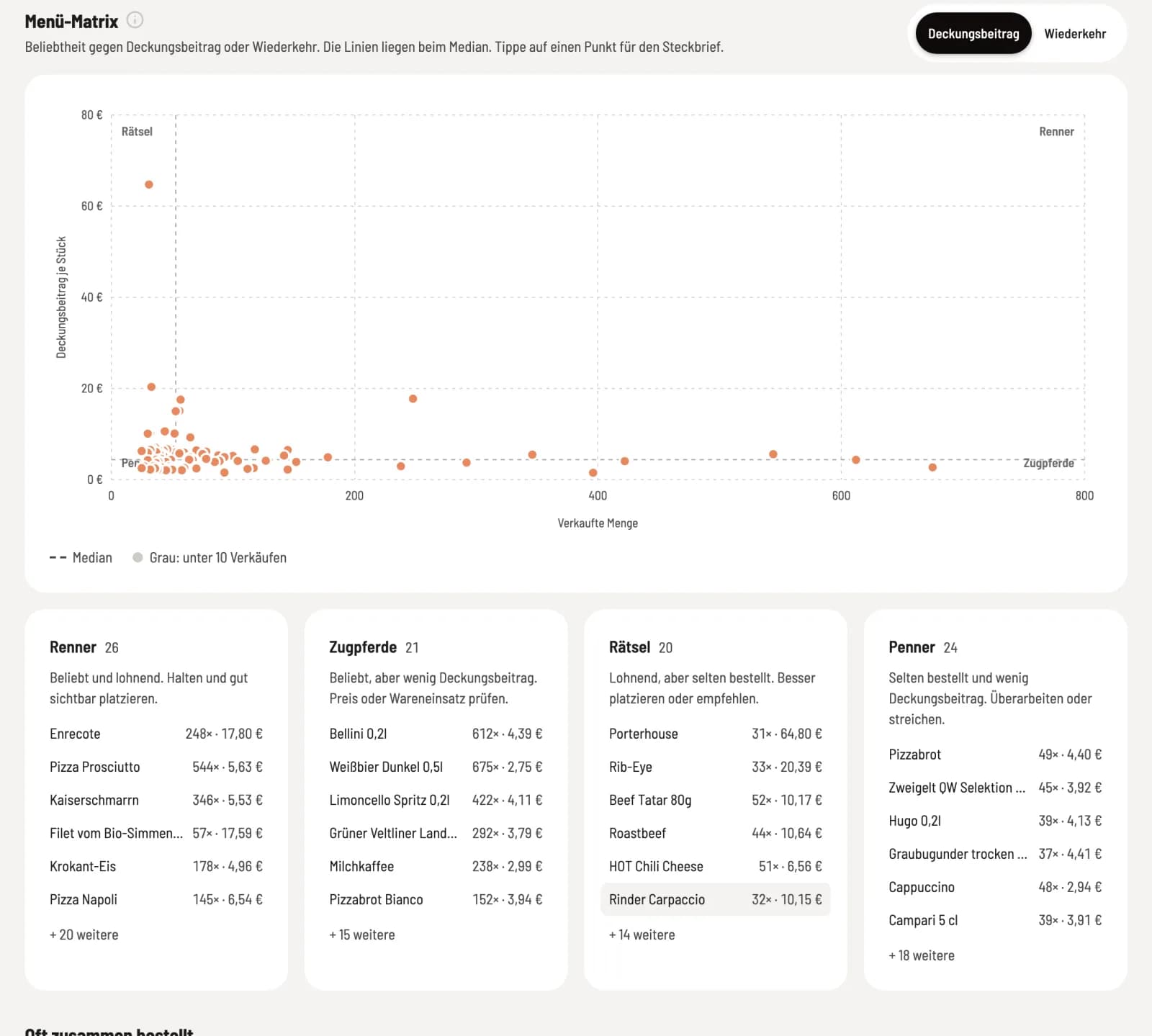
The menu matrix on the ** item** page ranks each item by popularity (sold quantity) and contribution margin per unit. The lines are located at the median and divide the map into four groups:
Top sellers – popular and profitable: keep them visible.
Workhorses – popular, but bring in little: check price or cost of goods sold.
Puzzle – worthwhile, but rarely ordered: better to place or recommend.
Bums – rare and not very worthwhile: revise or delete.
Step 1 of 3
Menu matrix
item with fewer than ten sales are displayed in gray on the side. Using Returns, you sort by how often customers buy an item , rather than by contribution margin.
Step 2 of 3
Often ordered together
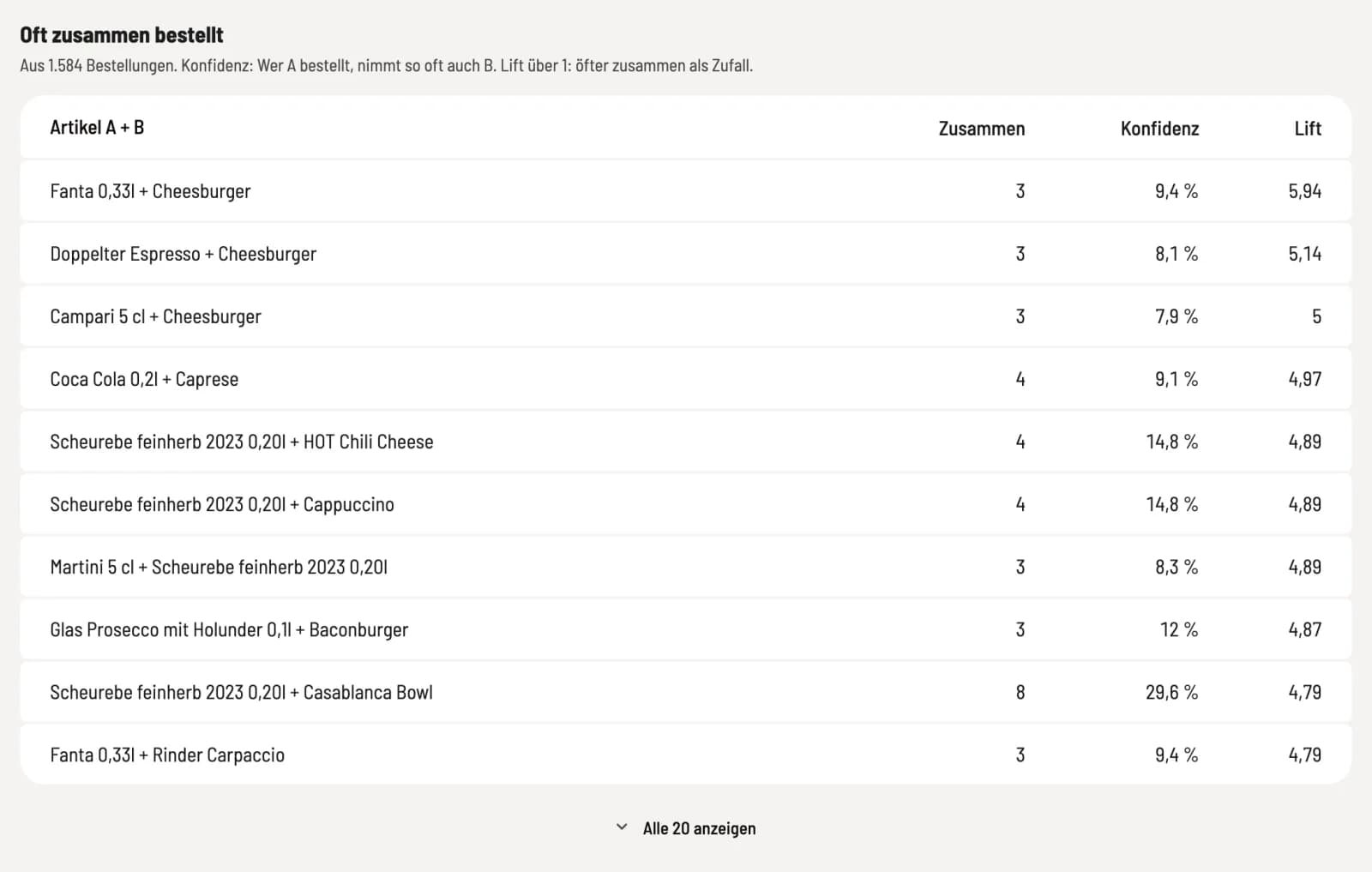
Which item guests like to combine – good for menus and recommendations. Confidence: Those who order A are also likely to order B. Lift above 1: more often together than by chance.
Step 3 of 3
Profile
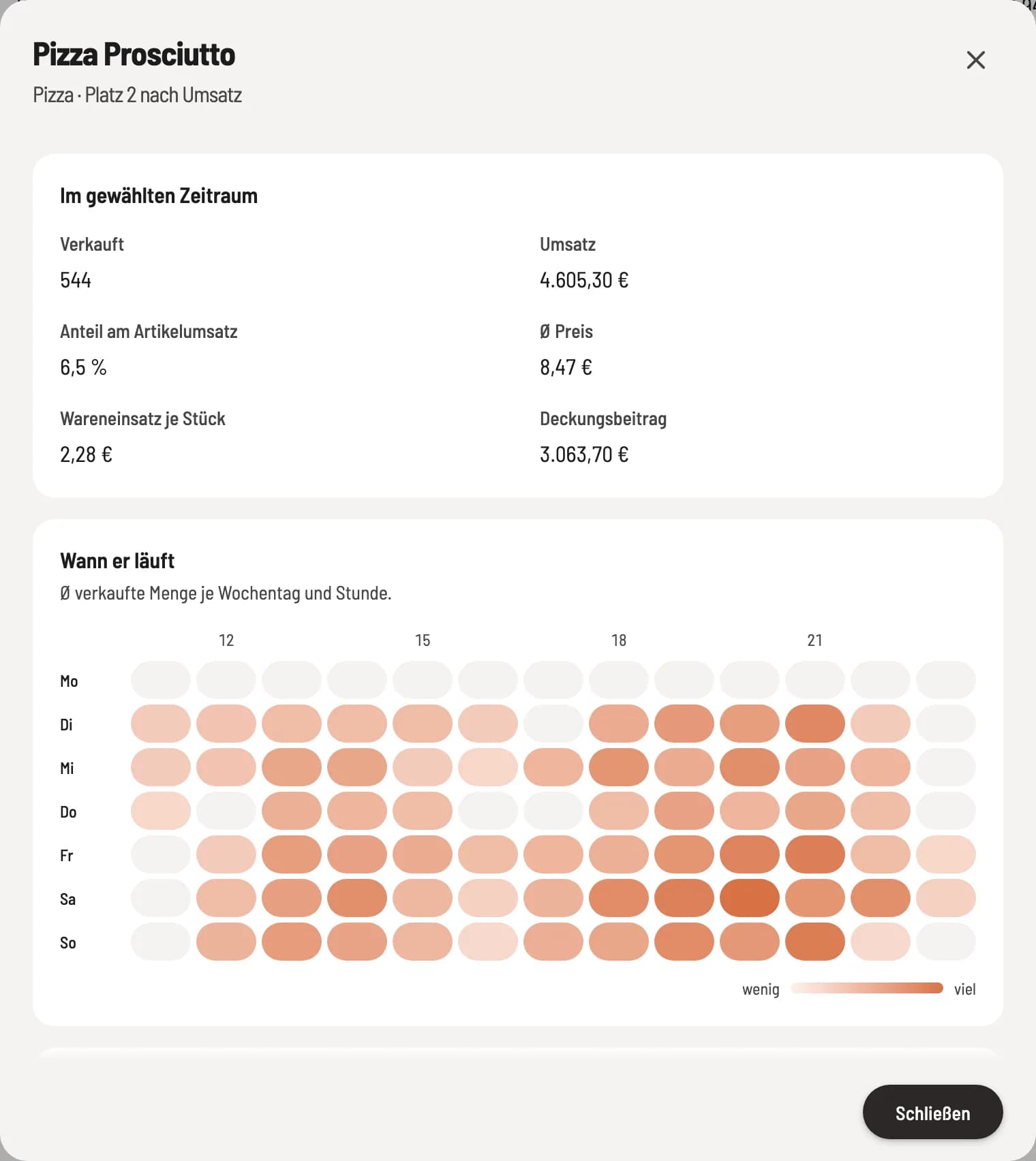
A click on an item – in the list or in the matrix – opens its profile: figures on the period, when it runs, via which channels, who sells it and what it is often ordered with.
Enter cost of goods sold
Servire needs the cost of goods sold to calculate the contribution margin. To do this, open the item in the ** menu **, click on Enter cost of goods sold next to the price, and enter the cost of goods sold in € (net). The contribution margin will then be displayed immediately. If the item is linked to the inventory and all purchase prices are entered there, Servire will use these prices in its calculations.
The statistics system records the cost of goods sold when it processes a shift – shortly after the shift ends, at the latest during the night. If you change it later, older figures remain as they were. If the cost was missing at the time, the system uses today's value and displays a message to that effect.